Introducing a photoblog

photoblog

Photography habits change a lot once you shift from film to digital cameras. One aspect that keeps nagging me is the smaller amount of time I spend with each image, given the large number of pictures I end up taking with a digital camera. I often want to slow down, spend time reflecting over an image, understand the layers within.

One way to do that is to engage in a daily ritual that makes you spend some time with your photographs. So when WordPress recently announced their photoblogging theme, I saw an opportunity there. In the last couple of weeks I’ve posted regularly on my new photoblog. The photo’s aren’t necessarily taken in the recent past – some of them are old, some very recent, and the idea is to spend time with each and in the process learn more about my tastes, strengths, weaknesses.

The theme itself is very interesting:

Imagine a theme for photoblogging where every page looks like it was designed to match the picture. Monotone is a chameleon, it does sophisticated analysis of the image you upload to determine a complementary color scheme. The width of the page also changes based on the width of the photo.

What this leads to is a curiosity about how the chosen photo will turn out in the final published form – what the background will be, and how it will complement (or contrast with) the photo. I’ve been very satisfied with the results so far, and I hope to engage regularly in this activity.

The year so far

Four months have gone by in 2008, and it seems like it was just the other day we returned from our holiday in Spain, at the beginning of the new year.  Gathering pieces of memory that would create a narrative for these months seems impossible without sifting through my collection of photographs. 


January


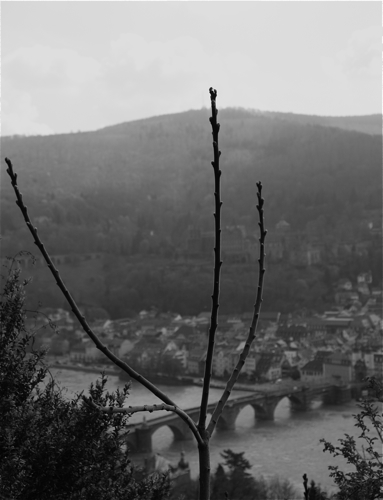
January, a cold month which brought no snow this year, passed by quickly.  On occasional visits to Heidelberg (to return a book or DVD at the library) I would brave the cold and walk to the bridge for a glimpse of the river and castle.   


February


In February I got my old Canon (EOS 300D) repaired.  There was a problem with the lens contact points, which the Canon factory fixed at no cost (to my pleasant surprise) and it was good to have the camera back in a mode where it worked consistently.  I experimented with shooting under low-light conditions with the 50 mm F1.8 lens; the results were mixed. 

During a weekend at Brussels, Wife and I drove to Antwerp to watch Jodha Akbar. Antwerp is known for its diamond industry, and the place is full of gujjus; at the movie hall almost every person seemed to know everyone else. About the movie, less said the better; Wife and I laughed a lot at the movie’s expense, while the Gujjus sat watching with the reverence a historical movie demands. (As to how we felt about the movie, you won’t find a better description than this one.)


March


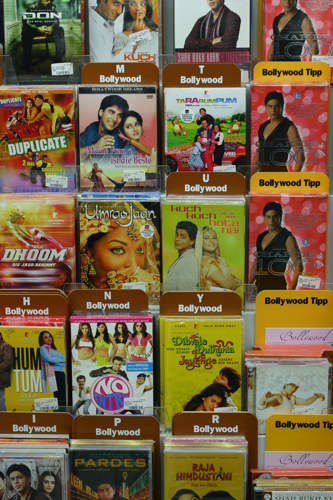
In March, on a trip to Cologne, Wife and I ran to an exclusive section for Bollywood movies in one of the shops. Shah Rukh Khan is a big star in Germany, and the craze for Bollywood movies is such that you can just as easily encounter a movie flipping through the TV channels here as you might in India. All movies, of course, are dubbed into German (which makes them hilarious to watch, especially the parts with some local gaalis).   


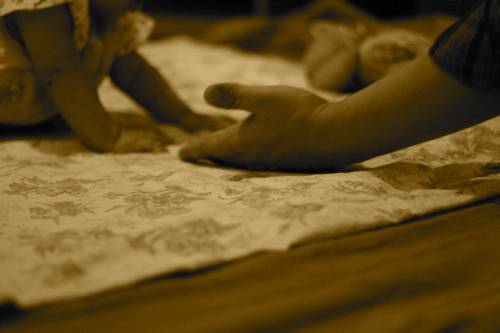
March was also the month where we got to see little P again, back from her long trip to India. At six months, she has the enviable ability to draw you into her world with her sharp eyes, penetrating glances and delightful mannerisms.  


Then there were the regular trips to Brussels.  The city has a different poster culture, in contrast to what I see in Heidelberg (where one mostly finds announcements for operas, concerts or theatre).  Film posters abound in Brussels, and at times they give an otherwise dull neighbourhood a dash of colour and character.


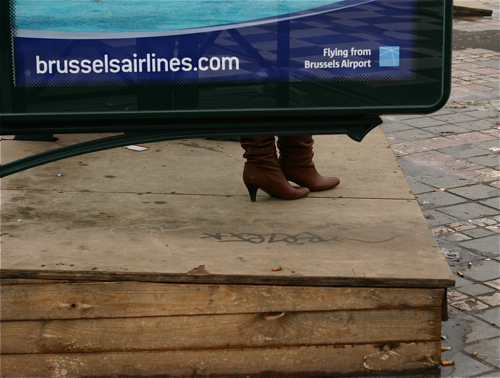
When it comes to fashion, Brussels is a poor cousin of Paris. But it does try hard to keep up (I can see that from my Wife’s shopping receipts), and occasionally one gets an image that combines the elegance of Paris with the squalor of Brussels. 


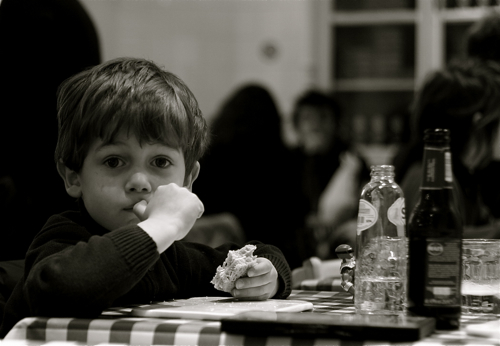
Saturday mornings we sometimes go out for breakfast at one of city’s many bustling cafes. On one occasion there was this little boy sitting with his papa, silently munching a sandwich. I couldn’t resist pointing my camera at him, and like any good subject he obliged with an unforgettable expression.   


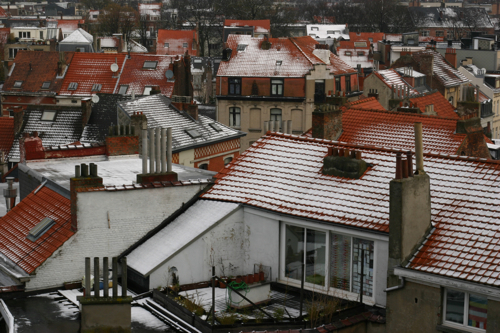
It snowed during Easter (The radio weather reports were full of excitement about a “White Easter”).  And although the snow hardly lasted, it gave a glimpse of how snow can transform a landscape.  I was looking forward to an image of Brussels rooftops full of snow, but that will have to wait another year.


April


At the end of March I bought a new camera – the Canon EOS 40D.  The old one still works (although it occasionally has problems with the light meter, resulting in pictures that are horribly overexposed), and I’ve decided to donate it to Wife (minus the best lenses, of course, which I will add to my collection).  I’m still getting used to the new body (and another new lens – the EF 24-105 L IS USM) and the weight.  So far I’ve been very satisfied with close-ups but the landscape pictures leave much room for improvement. 

The Reader (by Bernhard Schlink) had been lying on my bedside for a while, and I finally picked it up in April. It was a day of strange coincidences. In the morning I picked up a slightly old copy of The New Yorker and read an article about a photo album describing life of German officers at Auschwitz; among other things it alluded to the ladies who worked there as secretaries, and described how they seemed to live as though it was just another job. It made me think about the possibility of exploring the life of one such woman after the war – what she did after the war, and how her life during the war affected the one after it.  It would make an interesting subject for a novel, I thought. Later in the day I picked up The Reader, and it turned out to be an exploration of a very similar (if not exactly the same) theme.  After finishing the book (engrossing and thought provoking, to say the least) by evening, I learned that the German movie “Die Welle” was playing in a nearby movie hall.  I had recently heard about the movie in which a teacher, when challenged by his students that what happened with Nazi Germany in the 30s was no longer possible in today’s society, makes them part of a social experiment that in the end goes horribly wrong.  I watched the movie that night – a chilling end to a day that took me back to that era.  


I spent weekends in April experimenting with my new camera and lens.   


On one such weekend I went for a walk along Philosophenweg, which offered beautiful glimpses of the old part of Heidelberg, beyond the Neckar river. 


There were also more trips to the woods, which meant both time and space to experiment with the surroundings.  The above picture gave me confidence that the new lens is great at least for macro or portrait photographs. 


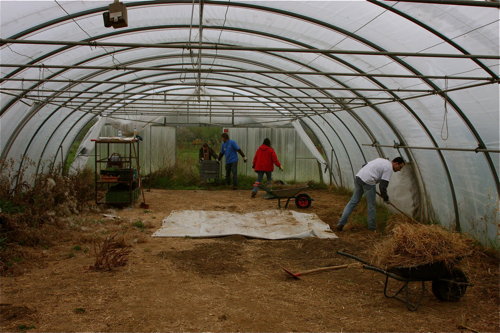
In the third week of April, I spent a day volunteering at a social organization that provides services for people with autism. It was part of an event organized by my employers; around 300 employees volunteered and were allocated to various projects based on our preferences. In the morning half our group helped weed out and clean the greenhouse; later, when it stopped raining, we worked in the field with lawnmowers. The autistic children – all teenagers – worked with us through the day, some accompanied by their mothers.  It was a revelation to watch the care and empathy the mothers showed throughout, without the slightest sign of tiredness or resignation that one sometimes sees with mothers of normal children. 


* * * 

Photographs offer a potent means to record memories, but while they convey a lot of detail in very little space, relying only on photographs would make me miss out on many events that happened “in between”. Nevertheless, I’m going to experiment with this style for a while – so you are going to see a lot of pictures in the weeks ahead. 


China, Tibet, India

At first I did not see the Chinese flags. The lady who handed me the pamplets asked if I knew what was happening around Tibet and the Olympic Games, and my reply – hinting at my sympathy for Tibet – made her squirm. Only when I looked beyond her did I see the sea of red.

It was a demonstration by Chinese students studying here in Germany, against the supposedly incorrect portrayal by some Internet-based media on the recent Tibet related uprisings. The placards highlighted photos showing “Indische Polizei” (Indian Policemen) dragging Tibetians, with the intent of showing that the Chinese were being framed by the media.

Spanish Holiday – Part 2

beach

The beach wasn’t anything like those seen in advertisements of beach resorts, with fine golden sand, palm trees bent seaward and women in bathing suits. This one was full of pebbles, rocky in places and mostly empty. It had, however, one distinguishing trait, something that gave the landscape character: after a straight stretch the beach curved along a section that jutted into the sea, and this section had an old tower, in ruins and abandoned.

Continue reading – Photo Essay: Spanish Holiday Part 2

Tungabhadra

I spent a few days at Hampi during my recent India visit. The impression left by those days are intensely visual, not just due to the nature of the place itself but also because I had very few interactions with people – locals and tourists – during the trip. So it is appropriate that I record this destination through photographs.

I start with a series on Tungabhadra. The river usually does not occupy much space in typical itineraries of Hampi, but we had to cross it at least twice each day, to and from our guest house on the bank across Hampi. Each boat ride was a little adventure, especially for my parents who had to hop along a dozen sandbags to reach the alighting point, and then haul themselves onto the rocking boat. All around there was more rock than river (it was well past the monsoon season) and it was frightening to imagine the river in spate with all those rocks submerged.

Enough words. Here are the pictures: Photo Essay – Tungabhadra

Departure

The International Departures section of an airport in India is a good place to get an impression of who is leaving the country. In the year 2000, when I first left the country as an adult, I was surprised by the density and commotion outside the international airport at Chennai. It looked more like an image we carry of Indian railway platforms: the masses we associate with second or third-class railway travel had turned up, carrying their life-long accumulations and accompanied by a good portion of their family tree. It took a while to figure out the location of the entrance (well hidden by the bloating crowd waving goodbyes) and quite some effort to make my way through that crowd into the relatively less dense environs inside the airport building.

My notions surrounding the exclusivity of air travel to a foreign land were shaken that day. Brain-drain from the country gets a lot of coverage in the media, but those intellectuals seemed a small proportion of Indians travelling abroad. This thought occurred to me once again a few weeks ago when I reached the Departures section at Hyderabad airport. The scene had changed little: you were instantly engulfed by people and their luggage cards laden with articles aimed at creating a little India abroad; there was little indication where the queue to the entrance began; once in the queue, you walked at an agonizingly slow pace, watched – perhaps with a mixture of envy and hope – by dozens of faces; you saw people ahead in the queue display emotions typical for someone going abroad the first time: anxiety, awe, confusion about the luggage, fear of having missed a document; you also saw others trying to figure out ways to smuggle in some relatives into the passengers-only section of the airport (“My baby needs attention – please let the grandmother in!”, “There is too much luggage and I have a knee problem – can I take my brother inside?”); you watched the security personnel attempting, through their hasty mannerisms, to bring order into this chaotic universe.

Once inside, I realized I was very early: the Qatar airways counter had not even opened. I parked my luggage cart in a corner and looked around. It was a small, rectangular hall, with check-in counters lined across two of its perpendicular sides. This meant that the queues near the edge intersected with one another, which had the curious effect of straight-lined queues (at the far end of each side) turning slowly into a formless mass of people (at the intersecting edges). There were many airport officials walking about: senior ones with wireless sets who gave orders to others; junior ones who were mostly hanging around, waiting for someone to tell them what to do next; helpers whose only job was to take the luggage from the weighing scale and transfer it to a side where all check-in luggage was gathered, a task that occupied not more than twenty percent of their time. And every once in a while the smartly-dressed crew of an airline would pass by, like a flock of pink flamingos amongst a host of dull-coloured birds, and not surprisingly many eyes would follow them across the hall.

* * *

When the check-in counter opened I placed my large suitcase on the weighing scale and handed my passport and ticket across the counter. The lady looked at the scale – it showed 31.5 kgs.

“Sir, your luggage is overweight.”

“No, it isn’t,” I replied. “I have an allowance of 35 kgs – see here.” I pointed out the ‘Allow 35’ remark on my ticket.

She looked skeptical. After a few moments she said: “Sir, each luggage piece can only be 25 kgs. You will have to split this into two pieces.”

“But I travelled to India a few weeks ago with the same luggage and there was no problem. So why should there by a problem now?”

“Sir, is there no way you can move something to another bag?”

“No, I have only this suitcase – so that isn’t possible.”

She looked unsure of what to do next. After some hesitation, she spoke to her colleague, a man in the adjacent counter.

“How heavy is it?” the colleague asked.

“31.5”

“That’s fine – allow it.”

The lady processed my ticket and handed me the boarding card and an immigration form to fill. “Have a nice flight sir,” she said, with a smile.

“Thank you.”

I walked across to the nearby wooden writing platform and began to fill the form with details of my departure. I hadn’t completed it yet when a man came and stood close-by, facing me. He was short, unshaven, and wore a dull over-sized shirt that hung loose over the bony outlines of his shoulders.

“Could you help me fill this?” he asked, in Hindi.

“Sure,” I replied, and pointed to the form. “Here you write your passport number, and here the flight number – ”

“Could you fill the form for me?” he asked, lowering his voice. “I cannot write.”

He pushed his form, passport and boarding card towards me.

“Wait till I finish mine.” I said.

After completing mine, I turned to his. “Where are you going?” I asked, when I came to ‘Port of Final Desitination’.

“Sharjah,” he replied.

His boarding card indicated a flight to Dubai.

“So you are going first to Dubai and then to Sharjah?”

“Yes.”

“And this is your address – in Karimnagar?”

“Yes.”

“Why are you going to Sharjah – for work?”

“Yes, for work.”

I checked the box next to ‘Employment’ under the point labelled ‘Purpose of visit’, and handed him the form.

“Fill in your signature here,” I said.

He took the form, shook his head sideways, and made way for a woman standing behind him.

The woman – dark-skinned, slightly plump, wearing a fluorescent-orange saree over a parrot-green blouse, with shiny-red glass bangles covering half her forearms – stepped forward and stuck her passport and immigration form at me. I found myself smiling at her, reaching out to collect her form.

This time it took longer: the woman could speak only Telugu and I struggled to construct basic sentences in a language I had lost touch with. Her passport was new; it indicated that she was in her mid-thirties and that she lived in Bhimavaram. She was travelling to Muscat via Dubai. Was she going there to meet someone? No – and this took me by surprise – she was going to Muscat to work.

She took the completed form back and asked where she should go next; I pointed in the direction of the Immigration hall.

I watched her walk away. Confident posture, purposeful strides. She didn’t seem dazed or befuddled with her situation – travelling alone to work in an unknown land, equipped with only the vernacular of her region. What was her story? And how would it end?

* * *

The immigration queues were long; I chose one that appeared the shortest. After a while the woman in the orange saree appeared, and seeing me standing in line, she chose the same queue and stood a few places behind me.

Our queue was moving very slowly, and after a while the woman shifted to another queue. It was a smart move; she passed through immigration in no time. But I wasn’t very concerned; I had a book with me, and standing for a while was good – there was a lot of sitting to do in the journey ahead.

The immigration officer at our queue seemed to take an inordinately long time for each passenger. It occurred to me that he had no incentive for being efficient; he had to work on a shift for a specific period of time, and whether he cleared 5 or 50 people hardly mattered to him. He also seemed to have this curious habit of sending people away on some ground. The sardarji before me was also sent away – “Get the other seal also in that document!” was what I could hear, a few feet away. It was my turn next.

The officer was an elderly man, bald and sporting an unkempt greying moustache. He wore an expression that reminded me of a strict school headmaster: a frown that could turn any moment into a growl, a general air of dis-satisfaction about the state of affairs. I braced myself for the worst.

“Where is your visa?” he asked, carelessly flipping through my passport.

“That’s the one, sir,” I said, when he came to the page with my German residence permit.

“Where are you going?”

“Frankfurt, sir. Via Doha, in Qatar.”

He looked at my boarding card, and then back at my passport.

“Where is the expiry date in this visa?”

“It is a permanent residence permit, sir. So there is no expiry date. It is written ‘Unbefristet‘, which in German means ‘Unlimited’.”

“How will I know? I do not understand German!”

“Sir, I have been living in Germany since seven years. I recently came to India on a holiday.”

“Where is the stamp showing your arrival in India?”

I pointed him to the correct page. He was not satisfied.

“I do not understand this visa. You go to my colleague in the first counter – he is the right person for such visas,” he said, and waved at the next person in the queue to come over.

The queue behind the first counter had about twenty people; I had no intention of going through the queue once again.

“Sir this is the third time I am leaving this country this year – you can see that in my passport. I do not understand why this should be a problem now?”

The officer was already examining the documents of the next person, but he addressed me: “For permanent residents there is usually a card – where is your card?”

“Sir, in Germany there is no such card. In the U.S they issue a card but for Germany there is only a visa in the passport. The only card I have is my German drivers license – ” I pulled out the license from my wallet and waved it to him, ” here.”

He gave it a cursory glance and went back to the other person’s passport. He then began to question that person. I stood my ground. After a few moments, still flipping through the other passport, he said: “Just go and show your visa to that officer and come back.”

At first I didn’t realize he was addressing me. When it struck, I asked: “Just show it to him?”

“Yes, show it to him and if he says fine then I will let you through.”

I walked over to the first counter, bypassing the long queue, and spoke directly to the officer there. I explained the situation and asked him to take a look at my visa. He took a quick look, said it was fine, and handed the passport back. The interaction took less than a minute.

Back at my original counter the officer was addressing a foreigner. I waited for a pause to break in, and told him that the other officer had found the visa alright. He did not reply, and went on with the foreigner’s document. A few moments later the sardarji whom he had sent away before me came back with his paper. “I have the other seal also,” he said, trying to hand the document over to the immigration officer.

Now there were three of us at the counter, a situation that would be impossible in the West – at least in Germany. But Indians are adept at multi-tasking. Shortly after I arrived in India on this trip, a visit to the local medical store brought back awareness of this trait I had almost forgotten about. The person managing the medical shop would simultaneously process requests from five customers: he would take money from one, ask another what he wanted, reply to the third that his order was not in stock, walk over to the shelf and pull out medicines ordered by the fourth and the fifth. Such a virtuoso performance could leave the Germans gaping. It could also, at times, be a source of frustration for those who feel inadequately attended to.

I repeated my statement to the officer. He collected my passport, looked again at the visa. He then got up and slowly walked over to the the officer at the first counter I had spoken to. I saw him bend over that counter, then immediately stand upright again and walk back.

The officer came back to his seat and completed the formalities.

“How can we understand if they print things in a foreign language?” he asked.

“That is correct, sir,” I replied. “They should put such basic information in English.” And it was true – there was no easy way for him to ascertain the validity of a visa printed in a foreign language.

He placed my passport on the counter and turned towards the sardarji: “What do you want now?!”

I picked up the passport and walked towards security check.

Hyderabad diary – The Homecoming

Fruitstall

The day after I arrived in Hyderbad I drove with my parents to the university campus. It was a Sunday evening, and my father remarked that the traffic was moderate. “You should see it on a weekday,” he said, “The city is beginning to resemble the nightmare that Bangalore has become.” To me, the streets seemed to bustle with activity in a pleasing sort of way. Perhaps it was the effect of light: the last rays of sunlight that penetrated the maze of closely-spaced buildings conveyed a golden tint to everything in their path. I took pictures whenever we stopped at a traffic signal.

We had been invited by Professor Ujar, a friend of our family, to watch a play being staged by the university students. It was a play by Harold Pinter titled, coincidentally, ‘The Homecoming’. When I had learned of this opportunity last week while still in Germany, I had asked father to block our seats immediately.

Entering the campus was a bit like leaving behind a dusty desert for an oasis, green and quiet. Professor Ujar, who in his greying baldness and wide-rimmed glasses looks every bit the distinguished academician he is, welcomed me with a warm hug and introduced us to other friends he had invited. We soon found ourselves walking through the campus towards the auditorium. Along the way a few passers by stopped to greet the professor. One girl came up to him with a plea: the show was sold out and she wanted very much to watch the play – could he help?

Homecoming

The auditorium was small – which is always good for a play – and the props – a sofa set, some chairs and a table, a coat stand and a stack of drawers – were set not on but below the stage, right in front of the audience. (We were to learn later that the stage was in a state of disrepair, hence this shift in platform).We sat in the front row – a privilege offered to friends of faculty – but in the narrow space between us and the beginning of the actor’s area were a few rows of mattresses where students soon settled down, chatting and giggling merrily.

The play began fifteen minutes past scheduled time, and ran for two hours across two acts. Although the amateurism was evident in places, it was a spirited, enthusiastic performance. The larger problem, I thought, was with the theme, which didn’t seem to fit with the background of the actors; I’m not sure if a play like this – with characters from the working-class in London, speaking a tongue that was hardly respectable and having strangely disrespectful and inconsistent attitudes towards women – can be performed effectively by Indian-looking-and-speaking actors. It was a bold theme, and I was surprised at the ease with which these young students handled some intimate scenes. Consider this extract from the play (at this point LENNY and RUTH are in each other’s arms, kissing):

JOEY goes to them. He takes RUTH’s arm. He smiles at LENNY. He sits with RUTH on the sofa, embraces and kisses her. He looks up at LENNY.

……

He leans her back until she lies beneath him. He kisses her. He looks up at TEDDY and MAX.

…..

LENNY sits on the arm of the sofa. He carresses RUTH’s hair as JOEY embraces her. MAX comes forward, looks at the cases.

……

JOEY lies heavily on RUTH. They are almost still. LENNY carresses her hair.

…………..

JOEY and RUTH roll off the sofa on to the floor. JOEY clasps her. LENNY moves to stand above them. He looks down on them. He touches RUTH gently with his foot.

Sitting next to my parents, a part of my mind was dwelling on their reaction to all this on-stage intimacy from youngsters. In the end, father liked “the eloquence of speech” from the actors, while mother found the whole thing “strange”.

On the walk back from the auditorium Professor Ujar explained the reason for the delayed start: some students, mostly from the backward-caste category who had been admitted through the reservation quota, had insisted on watching the play even though it was sold out, while the students in the organizing comittee were wary of the trouble these students could create while the play was on. The Vice Chancellor of the university had to step in to resolve the matter, and after a caution the protesting students were let in. “The students who staged the play,” explained the Professor, “are from the more elite sections of the student population, and they are not too comfortable with the other sections.”

The local Times covered the event, and the article that appeared two days later had only nice things to say about the play (which is probably what the young students need, to motivate them further). It was a short piece, and one sentence instantly caught my eye:

“An existentialist play by Pinter would never be the easiest thing to stage. So, they decided to get it off the stage, and performed in the gallery!”

The coming weekend another group of students from the university is performing Girish Karnad’s Hayavadana. That sounds more promising, somehow.