When did you last go to the library?

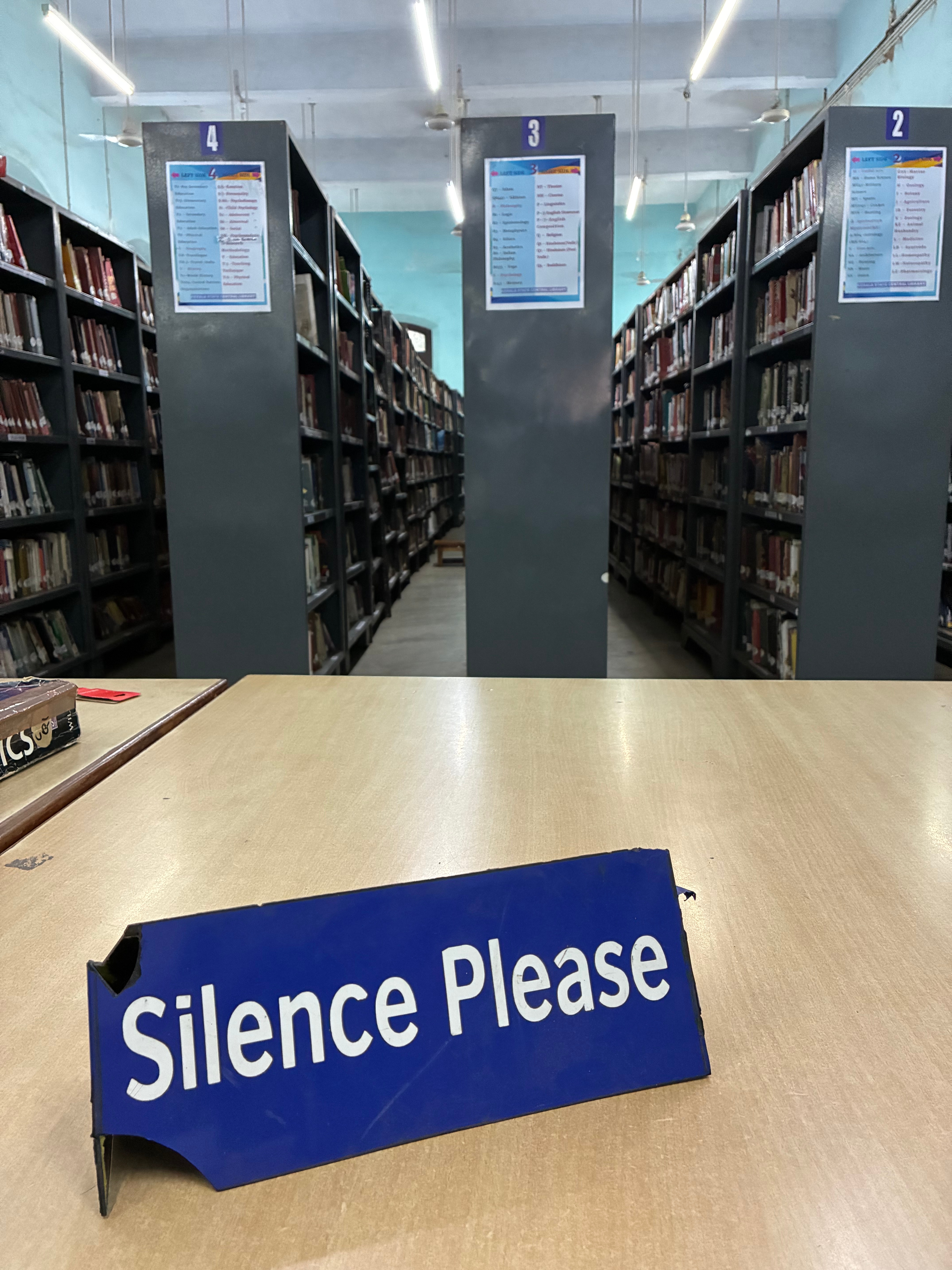
During an idle afternoon on a recent trip to Trivandrum, I visited the State Central Library. Inside the stately Gothic building, a uniformed official was looking into a register on his desk. I approached him and asked where I could find the English collection.

He did not understand English. Malayalam was a tongue I understood but struggled to speak. I tried Tamil – not my mother tongue, Kannada, but closer to his language – and it worked. To gain access as a visitor I had to fill out a form and get it signed by the “duty librarian”. The form was in Malayalam, and he pointed to the spots where I had to fill in my name, address, and purpose of visit. “Visiting,” I wrote.

The duty librarian was a young woman seated behind a desk in a wooden cubicle. There was no one else around, so I walked up to her and handed the form. At the bottom of the page she wrote “Permitted to visit library,” signed below, and added the date. I asked her about the sections in the library. After giving me a broad outline of the building, she directed me to where I could find books in English.

I spent two hours in the tube lighted hall stacked with books in English, sitting at a large wooden desk under a ceiling fan, reading through snippets of books I picked from shelves with labels that interest me these days. One of the labels read, “The social problems of and services to groups of people”.

The library was empty and silent. Occasionally one or two young women would pass by. Another librarian, a middle-aged woman in a salwar kameez, sat nearby cataloging a stack of books. After a while she left and another woman took her place.

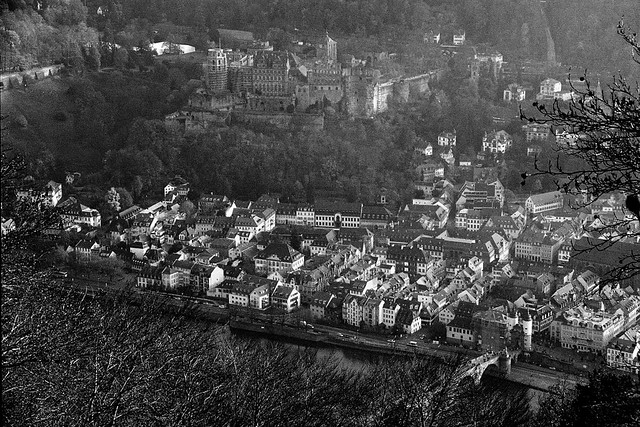
When I left the building, I felt a mixture of elation, loss and disquiet. Such spaces are a gift, but we can no longer take them for granted. I thought about the library in Heidelberg that was a 5 minute walk from our home in that city; I thought about banned books no longer available in libraries in the US; and I thought of a photo essay I’d read recently, with text by Jerry Pinto that ended with these words:

“That edifice which looks so imposing, those rows of books which look so welcoming, they are as susceptible to the passage of time as you are. Time ravages books just as much as silverfish, mildew and blades wielded in secret and in silence.

The book has many enemies. So have libraries. But the worst enemy of all is the sound of receding footsteps, as people walk away from libraries.

Tell me, when did you last go to the library?”

Neighboured occurences

img_0151

News of the incident arrived through the Internet. On Saturday afternoon someone had rammed his car into pedestrians in Bismarkplatz, a square two hundred meters from our apartment. Three people were injured. The attacker was pursued by the police and shot near the Alte Hallenbad on Bergheimerstr.

We were home, but heard nothing.  A friend sent an SMS asking if we were alright. My wife posted the news on Facebook.

Earlier in the afternoon, as we walked on the Hauptstrasse, she’d observed how common it was these days to see a car on the pedestrian zone; these folks probably lived here, but vehicle access must be restricted, she said. After the incident, she recalled this conversation. People driving on the Hauptstrasse had begun to worry her of late, and now there was an event involving pedestrians on a square nearby.

Around dinnertime the Hauptstrasse carried the usual Saturday evening buzz. There were no signs of change.

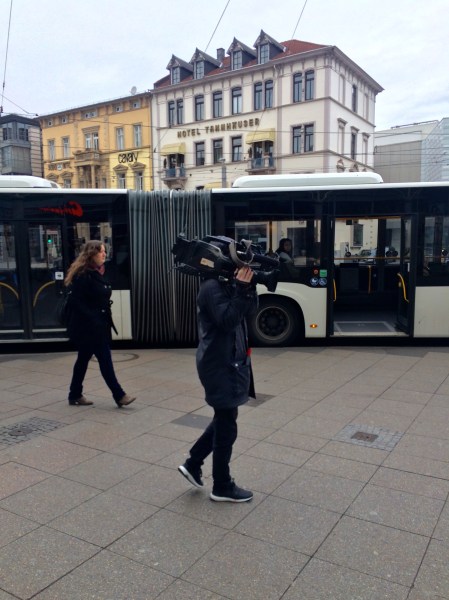
Next morning, under a grey sky, I walked to the Grimminger bakery on Bismarkplatz. The car had run into the pedestrians right in front of this bakery. Two tulips and a candle lay beside a pillar nearby, circumscribed by yellow etchings on the floor that revealed where the attacker’s car had stopped. Not far from it a cameraman readied himself while a young blonde in a dark coat waited with a yellow mike.

fullsizerender-10

The bakery girls were chirpy. I paid for two rosinenbrötchen and a croissant before turning back. On the way home I ran into our neighbours M and A and their two boys. Smiles and greetings followed. I told them about the flowers and the cameraman on the square. M asked if I knew what had happened to the injured. No idea, I said. The smiles had vanished, eclipsed by murmurs of concern, but they flashed back as we said goodbye.

That evening I learned that one of the three injured, a 73-year-old German man, had died. The accused was a 35-year-old German man, now recovering from the gunshot wounds. His motives were unclear. Terrorism was not suspected.


Games people play

The lines behind the REWE checkout counters were dense and busy. Christmas was behind us, but grocery shopping showed no signs of lulling. I placed my items — aubergines, thyme sprigs, olive oil, lemon, cheese, yoghurt, sambal oelek sauce, avocados — on the conveyer belt. The woman behind the counter was one of those sprightly, chatty ones who make you wonder if this isn’t the best job in the world. Middle-aged, in her early fifties perhaps, she wore her golden hair in a plait. A round face with wise wrinkled eyes. Simple stud earrings. No makeup.

When my turn came, I greeted her and asked: “Haben Sie eine papiertüte?” Do you have a paper bag?

“Ja, hab ich,” came the reply, as she scanned the groceries and put them aside.

The typical response here is to hand a bag over to the shopper. The woman did no such thing; she continued to scan my items. At one point she looked at me with a cheeky grin, and said: You didn’t ask me for one, did you? You only asked if I have a paper bag.

I laughed, and said: That’s a game I play with others!

Well, now you see that others can play it too! She smiled and gave me the bag.

Along the Neckarwiese

Neckarwiese

Last Sunday, late in the afternoon, P & I crossed the Theodor-Heuss bridge and climbed down to the riverside, for a walk along the Neckarwiese. This stretch of green between the Neckar and Neuenheim is a popular spot, and on this day people were basking in the afternoon sun, enjoying the first signs of summer after a cold April.

The tall poplar at the beginning of the stretch had just begun to bloom, and this state, where the tree’s inner structure shone through the thin foliage of leaves, gave it a mysteriously beautiful character, not unlike a bride’s face seen through a veil of silk gauze. We walked to the tree and sat under it. A blonde woman stood by the river ringed by four children, their attention centred on a swan with her tiny cygnets. Nearby, a gang of students sat with their speakers and musical instruments — drums, guitars, and a keyboard — while another was picnicking with a spread of snacks and beer laid out on a mat. There were families with children running about in orbits, and one Turkish group had set up a table with chairs, where they sat drinking tea and laughing. Couples lounged on the grass, and here and there we spotted a solitary man or woman, sitting or lying prone, reading or simply staring ahead.

We walked next to the water and soon reached the children’s recreation area, a space of creative confusion with a troop of boys and girls running and jumping and shouting and playing on the slides, swings, and other equipment installed there. P pointed to a seesaw, which turned out to be three seesaws connected serially, so that the upward movement of one node affected not just another but two more nodes in that chain. We stood watching this strange contraption for a minute or two, trying to decipher the logic of the ups and downs.

Beyond this section were two beach volleyball courts, both occupied by a pair of players on each side. Following the courts was again a long stretch of green, but here we saw fewer people lounging on the grass. Instead, following the pattern set by the play area and the volleyball courts, there were more instances of people playing: two red-haired girls tossing a yellow frisbee, a German boy with a Müller soccer shirt running after a dog, and a bunch of teenagers with Middle-Eastern features passing around a football. The din we had passed through earlier, in the children’s area, was replaced here by isolated shrieks and calls of players in a game.

We sat at the water’s edge, not far from a weeping willow, staring at the Neckar’s gentle flow and following the path of geese flying a foot above water and then landing, feet first, head and body angled backwards, wings spread out, and beak sticking out, all reminiscent of the Concorde.

On the walk back we chose the path that runs on the other side of the green, next to the grand mansions that stand facing the river. The benches here were occupied by people who sat looking at the Neckarwiese, and some of them were black — probably refugees, given how these young men were dressed in clothes that seemed out of character here, and how they sat in groups, or alone, watching the riparian crowd with a mixture of curiosity, awe, and perhaps longing. On the grass, a young blond-haired father sat reading to his daughter from a brightly illustrated storybook. A covey of burkha-clad women sat in a circle, like stones at a prehistoric site. Nearby, three middle-aged men with beards were playing cards. A young man in dreadlocks was strumming his guitar, watched by his swaying friends. There was a woman playing with a dog, patting and poking it with glee, and it emerged that the dog belonged to a girl passing by, who watched this scene with amusement before calling the dog back to her. A middle-aged couple walked past us speaking in Arabic, followed by a teenage girl with freckles jogging at a leisurely pace, wearing fluorescent pink shoes. Next to some groups a bicycle or a pram was parked, and in the middle of the green, almost invisible in all this visual noise, were two green garbage bins.

Back on the bridge, we stood at the edge taking in the long view of the riverine scene. From this height the Neckarwiese appeared small, merely a patch of green sandwiched between the muddy river and the tall mansions of Neuenheim, and the people gathered on it seemed like strange creatures, sitting in groups or in pairs, scurrying about with purpose or wandering aimlessly. The specifics we had seen earlier blurred into indistinguishable dots, which led, momentarily, to an illusion of timelessness: the scene had not changed in a hundred years, and would not change for a hundred more.

In the company of familiar strangers


Untitled


“What a rage of life flows around us all the time, invisible, inaudible, but intense and ever present.”
— TEJU COLE, The sense in turning away


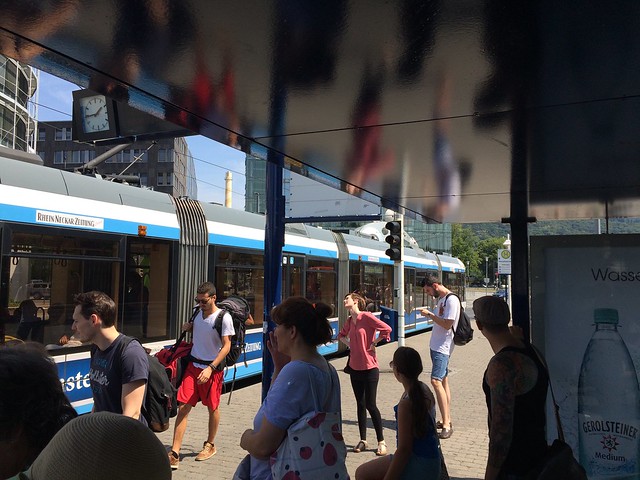
The new car arrived last Wednesday, two-weeks late. We’d returned the old one in July, before our US vacation, so for three weeks in between I rode on trams and buses and trains to work and back. The Deutsche Bahn app laid out my morning plan:

8:00 am: Walk 4 minutes to Bismarkplatz
8:05 am: Bus 34 to Heidelberg Hauptbahnhof. Reach at 8:12 am
8:18 am: S4 to Wiesloch-Walldorf. Reach at 8:28 am
8:32 am: Bus 707 to Walldorf. Reach at 8:41 am

You could call this rush hour, but while there was briskness — people streaming in and out of platforms with an energy seldom seen in this small city — there was no rush. I always got a seat. And often there were people nearby willing to talk openly, if not loudly, amongst themselves or on the phone. I could not get myself to do this in such closed public spaces, but I was glad — for once — the others were not like me. One morning, not long after I boarded the S4 in Heidelberg, a dark-skinned young man facing me began to speak on the phone in Kannada.

Continue reading “In the company of familiar strangers”

The spell of heat

Ploeck


The screen displays a ‘Sunny 40’. Switching to Fahrenheit, it says 104. There is no air-conditioning at home. The scorching heat seeps inside, its force inescapable.

The body senses this before the mind grasps it. Skin turns sticky, breathing is a labour, eyes squint in the white heat, thirst is hard to slake, flies pester the ears. A lethargy sets in. Sleep descends, like a drug promising relief.

The spell of heat turns the neighbourhood foreign, like someplace distant and unfamiliar. Women walk hugging the church wall, following its sliver of shade. Men lick their ice cones like babies. Decent girls tread the streets in swimwear. Buildings wear an unfriendly, shuttered look. Their shadows seem darker, sharper. Shops lure passersby with air-conditioned drafts. Temperature figures in every second conversation. The drowsy librarian blames the soporific heat. The erratic barber cannot deal with the stickiness of hair.

Continue reading “The spell of heat”

A fever like no other

DSCF3006


Among the electronic appliances at home, our television falls at the bottom of a list ranked by usage. Its screen stays blank most of the time, unless we decide, on a spur, to watch a movie on a weekend evening. We get thirty-five channels via the cable, and only CNN is in English: it isn’t our preferred medium to absorb world affairs. The old-fashioned radio does admirably well each morning (we do not mind at all that the news is in Hochdeutsch), and as for the rest there’s Economist and The New Yorker. The last time I watched CNN on TV was in the spring of 2011. (Growing up in India in the Eighties, those early days of Doordarshan, the daily 9 pm news was a regular fixture at home, and some newscasters — Salma Sultan, Geetanjali Aiyer — were household names. ‘The world this week’, Prannoy Roy’s news capsule that rounded up international events, aired at 10:30 pm each Thursday. It brought us, among other news, the fall of the Berlin wall and the arrival of CD as a technology to replace LPs. A quaint, black&white memory.)

Tennis is another exception, and the tennis court perhaps the most featured image on our TV screen. I do not watch the regular ATP circuit — those matches are mere dress rehearsals, — but the Grand Slams have me glued to the sofa.


DSCF2154


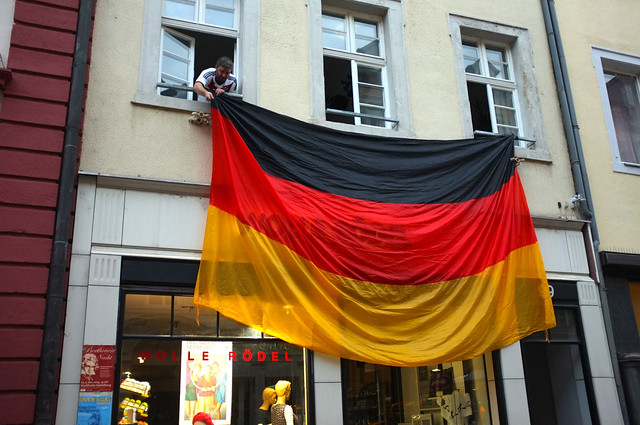
All this changes once every four years, when the FIFA World Cup begins. I try hard to keep status quo. I resolve, at the beginning, not to watch anything until the semis, but succumb before the referee blows a whistle in the opener. Little else gets done at home the next four weeks. The television overtakes the microwave and the iMac in usage rankings, stopping just below the perennially active refrigerator. I watch every match my time-zone permits, then complain to my wife that football is playing havoc with my routine. I tell her I’m not watching the dull pre-quarters stage (when games usually drag on for 120 minutes before the drama of penalties plays out), then join her at the sofa when the anthems begin. I consume, in these four weeks, more news and opinions on the web than I normally do in a year. It’s unreasonable, this attention I willingly consent to this silly game, and inexplicable. I do not watch the European football leagues — why this surge of passion during the World Cup?
Continue reading “A fever like no other”

Moving to Heidelberg

Altstadt

Near the end of November 2013, on an idle weekend morning, my wife spotted an advertisement for an apartment in Heidelberg. It was located in the altstadt, on one of the narrow lanes we walked through often during our visits to the city, and the prospect of living there, amid 19th and early 20th century buildings and monuments, left us breathless with excitement. The apartment itself did not look bad: we liked what the pictures revealed. On Monday I called the builders for an appointment, and some days later, on a cold morning when Heidelberg lay quiet under a layer of mist, we made our first visit. Despite the weather outside the rooms were airy and bright, and this answered one concern we had noted from the pictures. The apartment was good, the location great. A week and two visits later my wife and I decided to formally express our interest. Thus began our project that has kept us busy for most of the last five months.

Continue reading “Moving to Heidelberg”

Notes from September

I know, I know what some of you are thinking. Another blogger falls for Facebook. He’s lost the motivation to write, perhaps. Or he’s turned plain lazy. He’s probably grinding his way through a writer’s block. Work must be drowning him. Marital troubles, maybe. They must’ve had a baby! Perhaps he’s even dead, who knows…

Wishful thinking, I’d say. My excuse for the silence here is untypical. I’ve been writing fiction.

At this stage it’s the process that interests me more than the result, and the process of writing longish short stories (about five to ten thousand words) is not what I expected when I set out on this journey early in summer. It takes over everything else you do, this business of writing fiction. All my writing is focussed on the fiction pieces I’m working on, all reading directed towards getting the “right” influence on the story. Here’s Zadie Smith on ‘Middle-of-the-novel Magical Thinking’:

In the middle of the novel, a kind of magical thinking takes over. To clarify, the middle of the novel may not happen in the actual geographical centre of the novel. By middle of the novel I mean whatever page you are on when you stop being part of your household and your family and your partner and children and food shopping and dog feeding and reading the post — I mean when there is nothing in the world except your book, and even as your wife tells you she’s sleeping with your brother her face is a gigantic semi-colon, her arms are parentheses and you are wondering whether rumage is a better verb than rifle. The middle of a novel is a state of mind. Strange things happen in it. Time collapses. You sit down to write at 9 a.m., you blink, the evening news is on and four thousand words are written, more words than you wrote in three long months, a year ago. Something has changed. And it’s not restricted to the house. If you go outside, everything — I mean, everything — flows freely into your novel. Someone on the bus says something — it’s straight out of your novel. You open the paper — every single story in the paper is directly relevant to your novel…

My situation isn’t this extreme. If Zadie Smith’s condition is a malarial fever, mine is an ordinary mosquito bite. But the bite consumes a good portion of my attention each day. I live in my fictional world for long periods, among characters and situations that exist only in my head. (It is a form of madness.) Ideas and leads turn up at unlikely moments, and I know I cannot follow them all, because this is a short story, not a novel. But things can get out of hand. Short stories can turn into novellas, novellas into novels. I cannot control this. Right now I’m following my instincts the way a leashed dog follows his master. I only know where the next few steps go. Beyond that, it’s a mystery.

* * *

The other day we were in Frankfurt for lunch in a South Indian restaurant. It had opened not long ago, and some friends had dined there, Facebooking the culinary experience. Social pressure of this kind is hard to stomach. We drove a hundred kilometers for vada and dosa.

The place was chock-full of Indians. The cooks, visible through a glass partition, were Indian; the waiters and waitresses, dressed in dark jeans and white shirt, were Indian; the diners were all noisily Indian. It was odd, stepping into a place like this. We’ve grown used to appearing different from others around us, and here we were all looking same same. The first few moments were terrifying. Then it struck me that we weren’t really like the other Indians there. The immigrant always considers himself a different breed.

The waitress taking our order, a short young woman with two plaits, was humble, soft-spoken, diffident. Unlike German waitresses in a German restaurant. Or Indian waiters at established Indian restaurants here. She was new to the country, it was clear, and in this setting she was a pleasant reminder of a certain kind of people back home.

This attitude, it seemed, was taken as an invitation by some customers. At two tables nearby the waitresses were spoken to in harsh tones. Common in India, unheard of here. The immigrants had reverted to their original colours.

Dosa was good, vada less so. But this was no time for complaint: South Indian food is hard to come by in Germany (most Indian and Pakistani restaurants serve only North Indian cuisine). We were happy, we ate well.

In the men’s room — dingy, wet-floored — there was a short queue at the wash basin. The man behind me stood rubbing my back. After I finished washing he pointed me to the napkin dispenser next to the basin: there, he said, the napkins are there.

In all, a refreshing experience. How boring the Germans can be in comparison, and how I long at times for unpredictable behaviour from others. To be surprised, occasionally, keeps you alert, active.

The UK and the US have their Little Indias; the Germans now can boast of a Saravana Bhavan in Frankfurt.

* * *

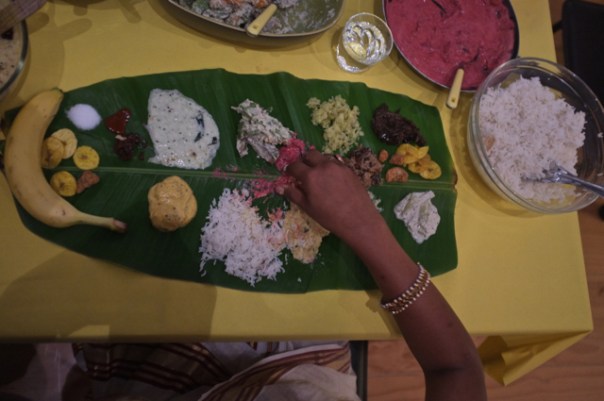
Earlier in September we celebrated Onam. Four families came home for a sadya — a feast, prepared in parts by everyone. The celebration is an yearly affair, but this time the immigrants had a fresh claim to authenticity: the sadya was served on plantain leaves. Wife had returned from Singapore not long before, smuggling on board Lufthansa a dozen or so crisp leaves. Our conclusion was unanimous: the meal tasted better on leaves than plates.

We ate not on the floor but at the dining table, taking turns, the men going first (served by the wives), the women following after. Tradition did not shape this sequence: space on the dining table was limited. The ritual was altered.


Sadya


“The rituals have altered.” Naipaul writes, in an essay titled ‘East Indian,’ describing practices of the immigrant Indian community in Trinidad:

Since open-air cremation is forbidden by the health authorities, Hindus are buried, not cremated. Their ashes are not taken down holy rivers into the ocean to become again part of the Absolute. There is no Ganges at hand, only a muddy stream called the Caroni. And the water that the Hindu priest sprinkles with a mango leaf around the sacrificial fire is not Ganges water but simple tap water. The holy city of Benaras is far away, but the young Hindu at his initiation ceremony in Port of Spain will still take up his staff and beggar’s bowl and say that he is off to Benaras to study. His relatives will plead with him, and in the end he will lay down his staff, and there will be a ritual expression of relief.

It is the play of a people who have been cut off. To be an Indian from Trinidad, then, is to be unlikely and exotic. It is also to be a little fraudulent. But so all immigrants become… Immigrants are people on their own. They cannot be judged by the standards of their older culture. Culture is like language, ever developing. There is no right or wrong, no purity from which there is decline. Usage sanctions everything.