Four months have gone by in 2008, and it seems like it was just the other day we returned from our holiday in Spain, at the beginning of the new year. Gathering pieces of memory that would create a narrative for these months seems impossible without sifting through my collection of photographs.
January
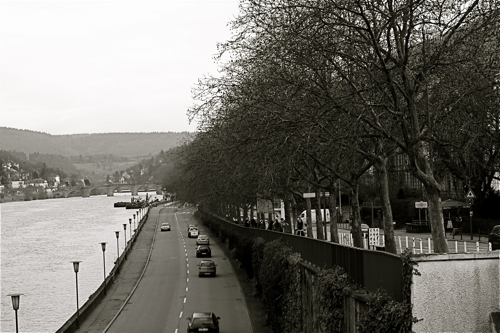
January, a cold month which brought no snow this year, passed by quickly. On occasional visits to Heidelberg (to return a book or DVD at the library) I would brave the cold and walk to the bridge for a glimpse of the river and castle.
February

In February I got my old Canon (EOS 300D) repaired. There was a problem with the lens contact points, which the Canon factory fixed at no cost (to my pleasant surprise) and it was good to have the camera back in a mode where it worked consistently. I experimented with shooting under low-light conditions with the 50 mm F1.8 lens; the results were mixed.
During a weekend at Brussels, Wife and I drove to Antwerp to watch Jodha Akbar. Antwerp is known for its diamond industry, and the place is full of gujjus; at the movie hall almost every person seemed to know everyone else. About the movie, less said the better; Wife and I laughed a lot at the movie’s expense, while the Gujjus sat watching with the reverence a historical movie demands. (As to how we felt about the movie, you won’t find a better description than this one.)
March

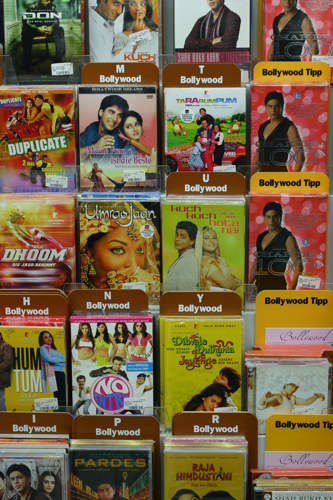
In March, on a trip to Cologne, Wife and I ran to an exclusive section for Bollywood movies in one of the shops. Shah Rukh Khan is a big star in Germany, and the craze for Bollywood movies is such that you can just as easily encounter a movie flipping through the TV channels here as you might in India. All movies, of course, are dubbed into German (which makes them hilarious to watch, especially the parts with some local gaalis).
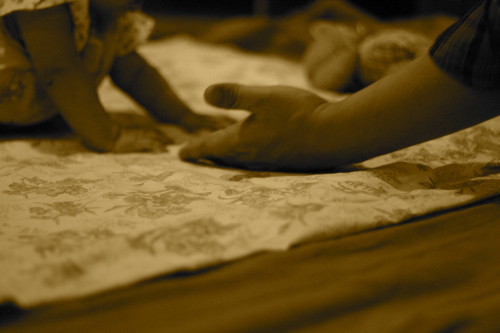
March was also the month where we got to see little P again, back from her long trip to India. At six months, she has the enviable ability to draw you into her world with her sharp eyes, penetrating glances and delightful mannerisms.

Then there were the regular trips to Brussels. The city has a different poster culture, in contrast to what I see in Heidelberg (where one mostly finds announcements for operas, concerts or theatre). Film posters abound in Brussels, and at times they give an otherwise dull neighbourhood a dash of colour and character.

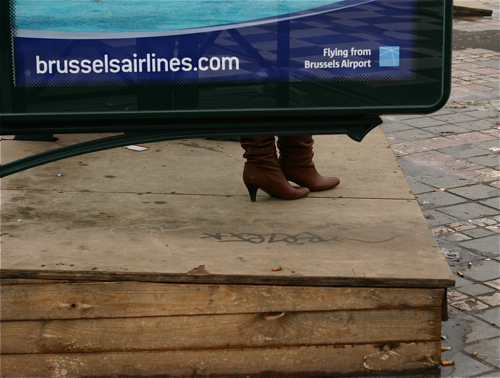
When it comes to fashion, Brussels is a poor cousin of Paris. But it does try hard to keep up (I can see that from my Wife’s shopping receipts), and occasionally one gets an image that combines the elegance of Paris with the squalor of Brussels.

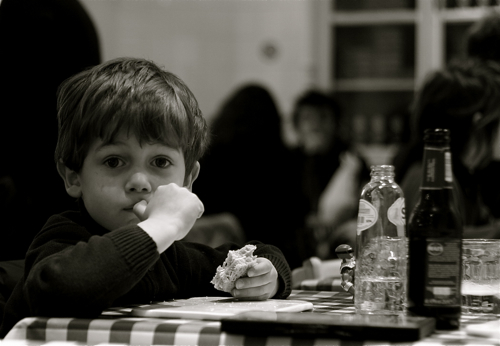
Saturday mornings we sometimes go out for breakfast at one of city’s many bustling cafes. On one occasion there was this little boy sitting with his papa, silently munching a sandwich. I couldn’t resist pointing my camera at him, and like any good subject he obliged with an unforgettable expression.
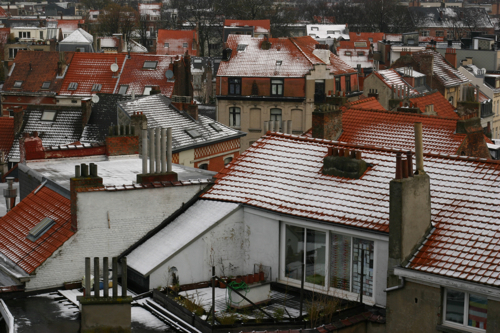
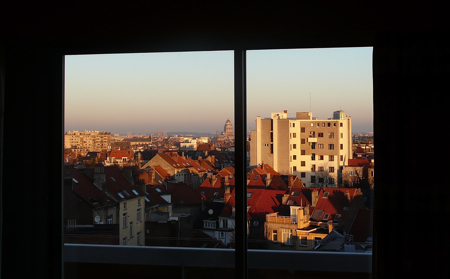
It snowed during Easter (The radio weather reports were full of excitement about a “White Easter”). And although the snow hardly lasted, it gave a glimpse of how snow can transform a landscape. I was looking forward to an image of Brussels rooftops full of snow, but that will have to wait another year.
April

At the end of March I bought a new camera – the Canon EOS 40D. The old one still works (although it occasionally has problems with the light meter, resulting in pictures that are horribly overexposed), and I’ve decided to donate it to Wife (minus the best lenses, of course, which I will add to my collection). I’m still getting used to the new body (and another new lens – the EF 24-105 L IS USM) and the weight. So far I’ve been very satisfied with close-ups but the landscape pictures leave much room for improvement.
The Reader (by Bernhard Schlink) had been lying on my bedside for a while, and I finally picked it up in April. It was a day of strange coincidences. In the morning I picked up a slightly old copy of The New Yorker and read an article about a photo album describing life of German officers at Auschwitz; among other things it alluded to the ladies who worked there as secretaries, and described how they seemed to live as though it was just another job. It made me think about the possibility of exploring the life of one such woman after the war – what she did after the war, and how her life during the war affected the one after it. It would make an interesting subject for a novel, I thought. Later in the day I picked up The Reader, and it turned out to be an exploration of a very similar (if not exactly the same) theme. After finishing the book (engrossing and thought provoking, to say the least) by evening, I learned that the German movie “Die Welle” was playing in a nearby movie hall. I had recently heard about the movie in which a teacher, when challenged by his students that what happened with Nazi Germany in the 30s was no longer possible in today’s society, makes them part of a social experiment that in the end goes horribly wrong. I watched the movie that night – a chilling end to a day that took me back to that era.
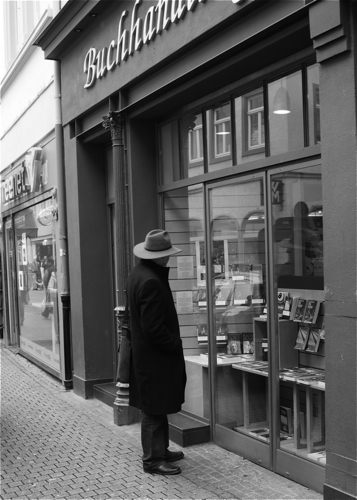
I spent weekends in April experimenting with my new camera and lens.

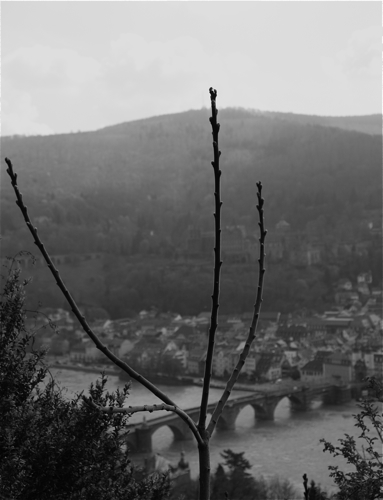
On one such weekend I went for a walk along Philosophenweg, which offered beautiful glimpses of the old part of Heidelberg, beyond the Neckar river.

There were also more trips to the woods, which meant both time and space to experiment with the surroundings. The above picture gave me confidence that the new lens is great at least for macro or portrait photographs.

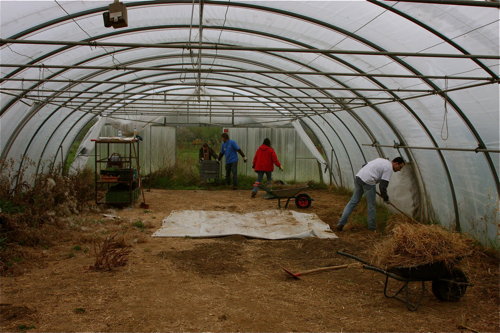
In the third week of April, I spent a day volunteering at a social organization that provides services for people with autism. It was part of an event organized by my employers; around 300 employees volunteered and were allocated to various projects based on our preferences. In the morning half our group helped weed out and clean the greenhouse; later, when it stopped raining, we worked in the field with lawnmowers. The autistic children – all teenagers – worked with us through the day, some accompanied by their mothers. It was a revelation to watch the care and empathy the mothers showed throughout, without the slightest sign of tiredness or resignation that one sometimes sees with mothers of normal children.
* * *
Photographs offer a potent means to record memories, but while they convey a lot of detail in very little space, relying only on photographs would make me miss out on many events that happened “in between”. Nevertheless, I’m going to experiment with this style for a while – so you are going to see a lot of pictures in the weeks ahead.











 Parmanu